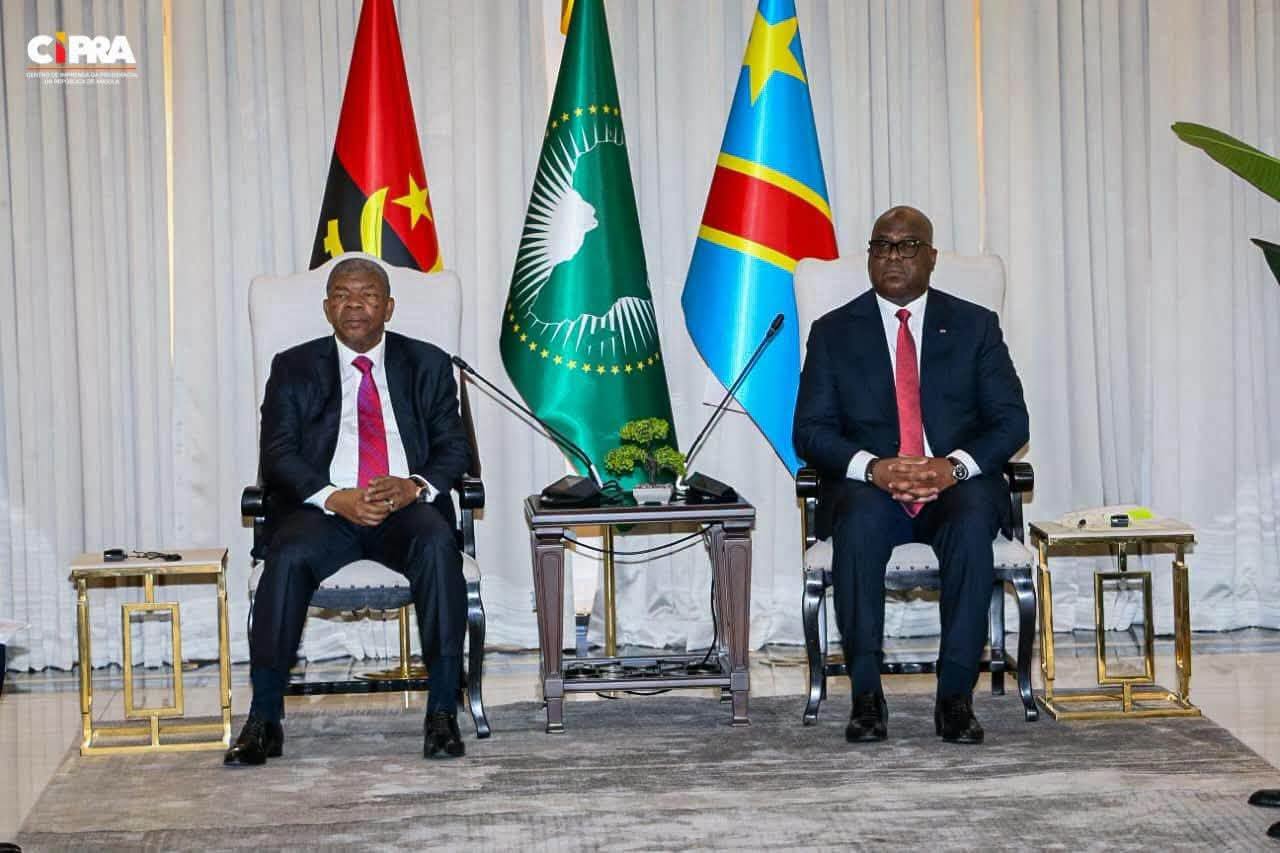


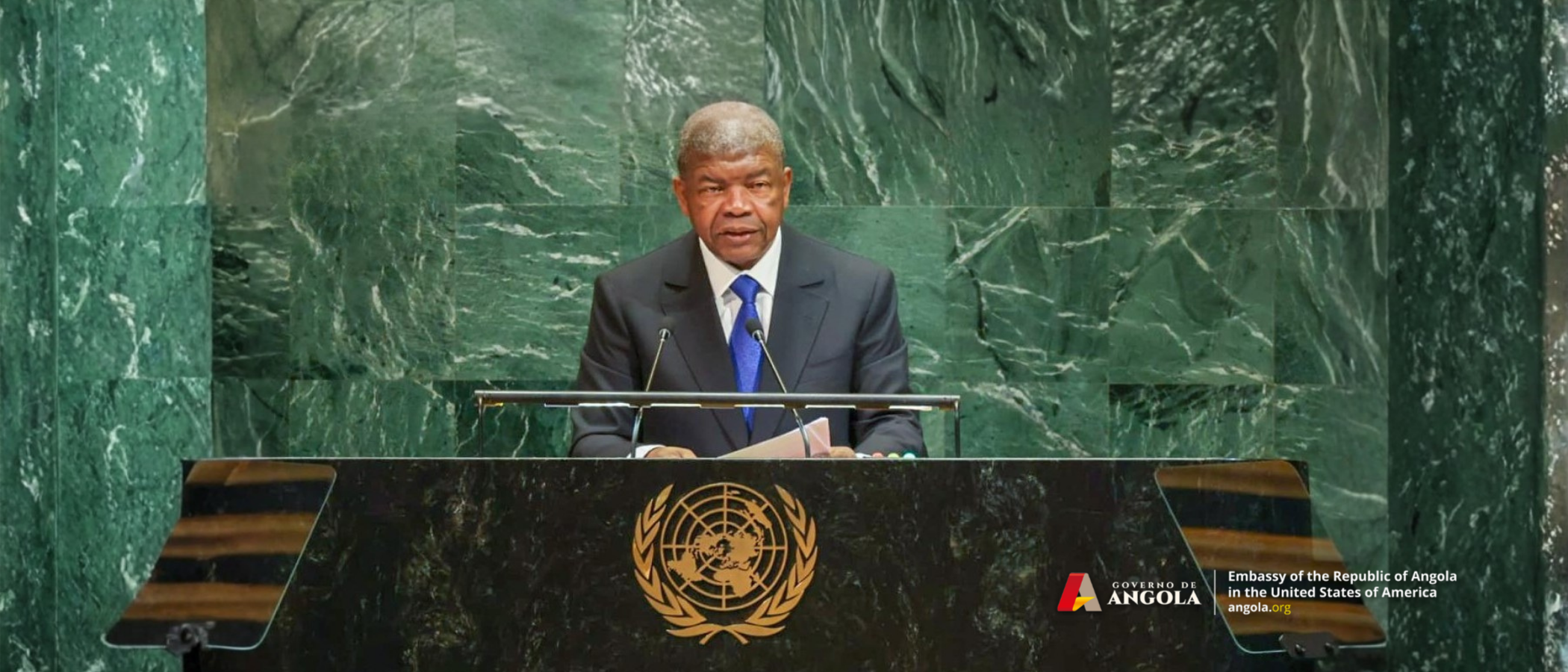
The President of the Republic of Angola and Chairperson of the African Union, João Lourenço, delivered his address at the General Debate of the United Nations General Assembly this Tuesday (23).
“Your Excellency António Guterres, Secretary-General of the United Nations,
Your Excellency Annalena Baerbock, President of the 80th Session of the General Assembly,
Your Excellencies, Heads of State and Government,
Distinguished Delegates,
Ladies and Gentlemen,
I stand before Your Excellencies in my capacity as President of the Republic of Angola and as Chairperson of the African Union, to speak about my country, our perceptions regarding the evolution of events in our increasingly troubled world, and also to address issues concerning Africa, a continent that mobilises our energies and efforts as we seek solutions that will enable it, once and for all, to awaken to development.
Allow me to congratulate Her Excellency Annalena Baerbock on her election to the high office of President of the United Nations General Assembly. I am confident that her experience and the knowledge she has accumulated throughout the various positions she has performed with great distinction will ensure the success of the work she has undertaken since the beginning of this month of September.
I also congratulate her predecessor, His Excellency Philémon Yang, for the assertive manner in which he presided over the General Assembly during the past year, devoting his full commitment to ensuring that this body functioned with commendable efficiency. The positive results achieved during his tenure deserve the recognition of us all.
I cannot fail to mention His Excellency António Guterres, Secretary-General of the United Nations, for the role he has performed with a strong sense of commitment, underpinned by his admirable qualities as a man of dialogue and peace amid the current geopolitical complexities.
Madam President,
Excellencies,
Eighty years have passed since, in response to the imperatives of that time, a group of countries and their respective leaders made the wise decision to establish the United Nations. Since then, through periods of greater and lesser turbulence, the Organisation has succeeded in fulfilling its vital role of maintaining international peace and stability, contributing to the development of humanity, and preserving and strengthening respect for human rights.
This is a major achievement of the peoples of our planet, one that must neither be neglected nor underestimated by any power, political leader or other actor. Otherwise, through the exacerbation of self-centred visions and interests, we risk squandering the benefits of peace bequeathed to us by the women and men who, over time, have brought us to this point in an environment of harmony and global reconciliation.
This journey has not always been linear. Yet, at the most critical moments, good judgement prevailed over the worst impulses towards large-scale conflagration. This was made possible through continuous dialogue as the only means capable of bridging differences, overcoming obstacles and calming the most troubled and belligerent spirits.
Today, these lessons from the past are of invaluable importance and should serve as our guiding references in seeking solutions to conflicts in Africa, Europe, the Middle East, Latin America, Asia and wherever else they may exist.
In the uncertain context in which we are celebrating the 80th anniversary of the United Nations, the theme “Better Together: 80 Years and More for Peace, Development and Human Rights” takes on a dimension that invites us to reflect on the profound significance of the President of the General Assembly’s call for renewed multilateralism and solidarity, within a framework of common and complementary actions carried out by a more agile, effective and accountable United Nations, as envisaged in the Secretary-General’s UN80 Initiative.
In light of these circumstances, it is urgent that we revitalise the United Nations and enable it to emerge from the complex situation in which it currently finds itself, restoring the active role it has always played and whose undeniable usefulness ensured that, even during the Cold War, we did not feel as close to a global conflagration as we do today, amid the profound discord affecting international relations.
The world’s major powers increasingly appear to be turning their backs on one another, moving away from even the minimum points of convergence that would keep them committed, above all, to prioritising dialogue and consultation.
The challenges of today confront us with a choice: either we do everything possible to preserve peace, or we face war with all its consequences, thereby jeopardising the future of humanity.
Those world powers that in the past played a crucial role in liberating Europe and Europeans from the grip of Nazism and Fascism, and also in liberating Africa and Africans from South Africa’s apartheid regime, cannot today behave differently by attacking other countries, invading and annexing foreign territories, or financing and organising subversion that may lead to the overthrow of legitimate governments, as we are currently witnessing on our own continent.
With such a dangerous precedent, no regional, continental or global institution will henceforth possess the moral authority to call to account any State that violates the principles governing the Charter of the United Nations and international law.
We Africans, from countries that were colonised for several centuries, understand better than anyone the importance of peace, because we face the daily struggle of providing people with food, safe drinking water, healthcare, education and other fundamental necessities. This creates a particular awareness of the harmful impact that insecurity and instability have on the achievement of our development goals and projects.
This reality is further aggravated by the multiple conflicts and wars affecting countries and regions of the world from which we had hoped to receive cooperation and engage in fruitful exchanges, enabling us to overcome our difficulties and contribute our immense resources and capabilities to global prosperity.
It is on this basis that the Republic of Angola has sought to make an honest and genuine contribution towards resolving the conflicts in the Sahel region, Sudan and eastern Democratic Republic of the Congo. With regard to the latter, our diplomatic efforts created a negotiating framework with solutions for peace which, regrettably, did not materialise in December 2024 as expected, but which remains a valid platform for other efforts currently being undertaken with the aim of bringing that conflict definitively to an end.
Madam President,
Excellencies,
This conflict, and so many others that we recall, are to a large extent the consequence of the passivity of United Nations Member States, which have often proved ineffective in the face of invasions of foreign territories and interference in the internal affairs of sovereign countries over recent years. Because these actions were not met with a firm, unwavering and assertive response, they became faits accomplis that now lie at the heart of the major tensions affecting the world.
The consequences are clearly visible in the Middle East, where the systematic failure to implement the relevant United Nations Security Council resolutions concerning the establishment of the State of Palestine has perpetuated a conflict that worsens every day and appears to have no end in sight, given Israel’s disproportionate and violent response and retaliation. While Israel has the right to exist as a State and to demand the release of those still held hostage following the tragic events of 7 October, it cannot be permitted to pursue, in Palestine and particularly in the Gaza Strip, a policy aimed at the extermination of a people.
The Palestinian people cannot be equated with Hamas, because peoples—and much less children—cannot be regarded as terrorists. They have exactly the same right to an independent and sovereign State in which they can preserve their culture, shape their future and provide predictable and secure prospects for their youth.
Concerns surrounding this conflict assume an even greater dimension in light of the silence, hesitation and timid reactions of the international community, which appear to legitimise the expansion of the war into countries across the region, inexorably eroding the authority of the United Nations.
Nothing could be worse than excluding the Palestinian delegation from this forum, where it should have the right to make its voice heard, in accordance with the terms of the Headquarters Agreement.
The failure to guarantee the presence of the President of the Palestinian Authority at this General Assembly sends a very negative signal, as it encourages the continuation of the genocide that we are all witnessing helplessly and with impunity, delays the resolution of the problem, and complicates the efforts being undertaken to bring this complex conflict to an end.
We strongly condemn this unilateral position, which runs counter to the principles governing the United Nations. In the same manner, we call for the unconditional lifting of the unjust and prolonged embargo against Cuba, which has serious consequences for the Cuban economy and the living conditions of its people, who struggle every day to withstand a punishment rejected by the international community.
Cuba, which played an important role in the struggle of African peoples that contributed to the overthrow of South Africa’s racist and inhumane apartheid regime and which, for this reason, was a signatory to the New York Agreements of 22 December 1988, which brought freedom to the South African people and led to Namibia’s independence, cannot arbitrarily and unilaterally be regarded as a State Sponsor of Terrorism, in light of the relevant United Nations resolutions.
This approach by a small group of countries, which is inconsistent with minimally acceptable standards of global coexistence, lies behind the unilateral and subjective sanctions imposed on Zimbabwe and Venezuela, producing no result other than suffering among their populations, who, in an act of profound patriotism, ultimately unite in defence of their nations.
Madam President,
Excellencies,
The authority of our Organisation, rooted in the Charter of the United Nations and international law, must urgently be restored, without narratives that reveal double standards, so that fair solutions may be found for the war in Ukraine, or so that those emerging from the Alaska meeting may be strengthened.
Given that Ukraine is a European country, and following President Trump’s pragmatic decision to meet with President Putin, without prejudice to the need for direct negotiations between Russia and Ukraine, one would expect European leaders, in the interests of peace and security in Europe, to seek dialogue not only with President Zelensky, but also with President Putin.
We cannot afford to waste this opportunity. Otherwise, we risk witnessing an escalation of unpredictable proportions and consequences, not only in Europe, where the relevant forces must abandon dangerous calculations based on the notion of achieving military victory by weakening the capabilities of their adversaries.
It is precisely in the face of today’s difficulties and the crisis confronting the world that the United Nations must re-emerge and become more proactive, preventing its role as the principal institution of global governance from being diminished and preventing it from becoming an organisation incapable of ensuring world peace. It is our responsibility, as sovereign States and nations, not to allow it to succumb.
The United Nations, in its present form, is the only organisation with the capacity to act on behalf of us all in seeking global consensus in favour of peace, and with the legitimacy to call to account Member States whose conduct on the international stage departs from its founding principles.
We must therefore preserve it at all costs and adapt it to the realities of the contemporary world through reforms that are urgently required.
In this particular regard, I advocate reform of the Security Council in accordance with the Common African Position, as embodied in the Ezulwini Consensus and the Sirte Declaration, adopted twenty years ago, which provide for two permanent seats and five non-permanent seats for the African continent in an expanded Security Council that is more representative and consistent with contemporary geopolitical realities.
Without this essential step, which has already been delayed for an unjustifiably long period, we will not be able to ensure the implementation of the Pact for the Future adopted last year, which recognised the urgent need to provide the United Nations with a more democratic and balanced Security Council.
The Pact has the merit of representing a major opportunity to revitalise multilateralism, making it more inclusive and enabling it to serve as a broad foundation for discussions on the sensitive issues facing today’s world. Among these, alongside other important matters, I would highlight financing for development and the climate challenge.
There is much to discuss regarding development assistance, but it is also fair to highlight the recent progress made with the adoption of the Sevilla Commitment, reached at the Fourth International Conference on Financing for Development. It calls for urgent reform of the international financial institutions to make them more representative, inclusive and capable of responding to the pressing needs of developing countries, particularly those in Africa.
I believe that this instrument, together with the Pact for the Future, the United Nations Framework Convention on International Tax Cooperation and the proposed United Nations convention on sovereign debt, still under discussion, can collectively serve as a political, financial and normative platform that will provide significant momentum towards achieving the Sustainable Development Goals.
Madam President,
Excellencies,
It is essential that we recognise the climate crisis as the greatest existential threat of our time, one that can only be effectively addressed by acting together, in a coordinated manner and in solidarity.
In light of the continuing rise in global temperatures and increasingly violent and frequent natural disasters, it has become imperative that the nations that benefited most from industrial and economic development in the past fully assume their historical responsibility by ensuring, as an act of climate justice, adequate financing, technology transfer, and support for adaptation and mitigation in developing countries.
Countries responsible for only a marginal share of greenhouse gas emissions are those that disproportionately, and largely on their own, face the impacts of climate change, global warming and their devastating effects on agriculture, food security and public health.
In view of this evidence and the responsibilities arising from it, Angola remains committed to the Paris Agreement and to implementing adaptation and mitigation measures aligned with the United Nations 2030 Agenda and the African Union’s Agenda 2063, which embody the consensus on mobilising predictable and accessible climate financing to ensure a just energy transition capable of protecting the most vulnerable communities.
This cross-cutting issue, which requires an increasingly responsible approach both within public policy agendas and among major industrial corporations, will receive due attention at the COP30 Climate Summit to be held shortly in Brazil. Brazil is hosting an event of this magnitude for the second time, clearly demonstrating the country’s commitment and engagement with environmental issues.
In 1992, in Rio de Janeiro, the United Nations Framework Convention on Climate Change was opened for signature, establishing a framework that has proved highly valuable for the increasingly substantive discussions that continue to this day. At the forthcoming Conference, it will undoubtedly enable us all to take another step forward along the long path we must travel to achieve humanity’s major climate objectives.
Excellencies,
Eighty years after the founding of the United Nations and more than three decades after the end of the Cold War, our expectation was that we would be living in a world free from today’s uncertainties and less dangerous than the one we currently face.
Until 1991, we lived in a context marked by a pronounced division between two ideologically opposed blocs, which nevertheless provided a more predictable framework and one less susceptible to sliding into large-scale confrontation.
This retrospective should not lead us to conclude that global stability is possible only within a framework of rigid divisions of any kind. Rather, it should encourage us to build a framework based on a balance of interests and shared concerns regarding global security, capable of generating complementarity and convergence of all kinds within an environment of multilateralism—the only path capable of saving us from catastrophe.”